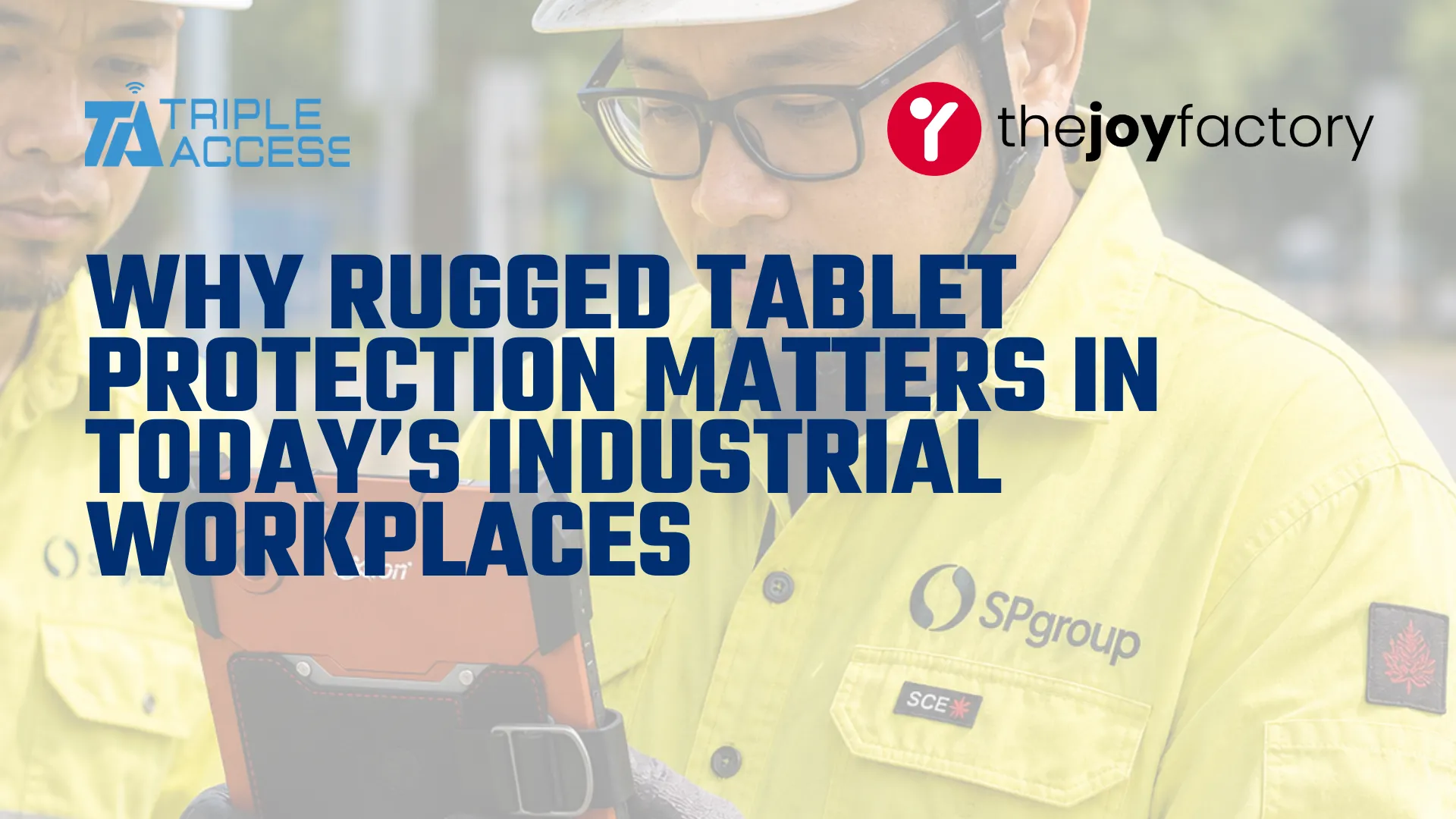
Why Rugged Tablet Protection Matters in Today’s Industrial Workplaces
Digital transformation has changed the way frontline teams work.
In factories, warehouses, construction sites, healthcare facilities and field operations, tablets are no longer simply devices for browsing the internet or checking email. They are increasingly used to access real-time information, complete inspections, update records, manage inventory, communicate with teams and support day-to-day decision-making.
But there is an important question that businesses often overlook:
What happens when the device supporting these workflows cannot handle the environment it is being used in?
A tablet designed for everyday consumer use may not be built to withstand drops, dust, water, vibration, oils or demanding working conditions. This is where rugged mobility solutions, such as those from The Joy Factory, become relevant.
The Joy Factory’s aXtion range is designed around rugged protection for Apple iPad, iPhone and Microsoft Surface devices, while its MagConnect range provides mounting solutions for mobile and fixed workplace applications.
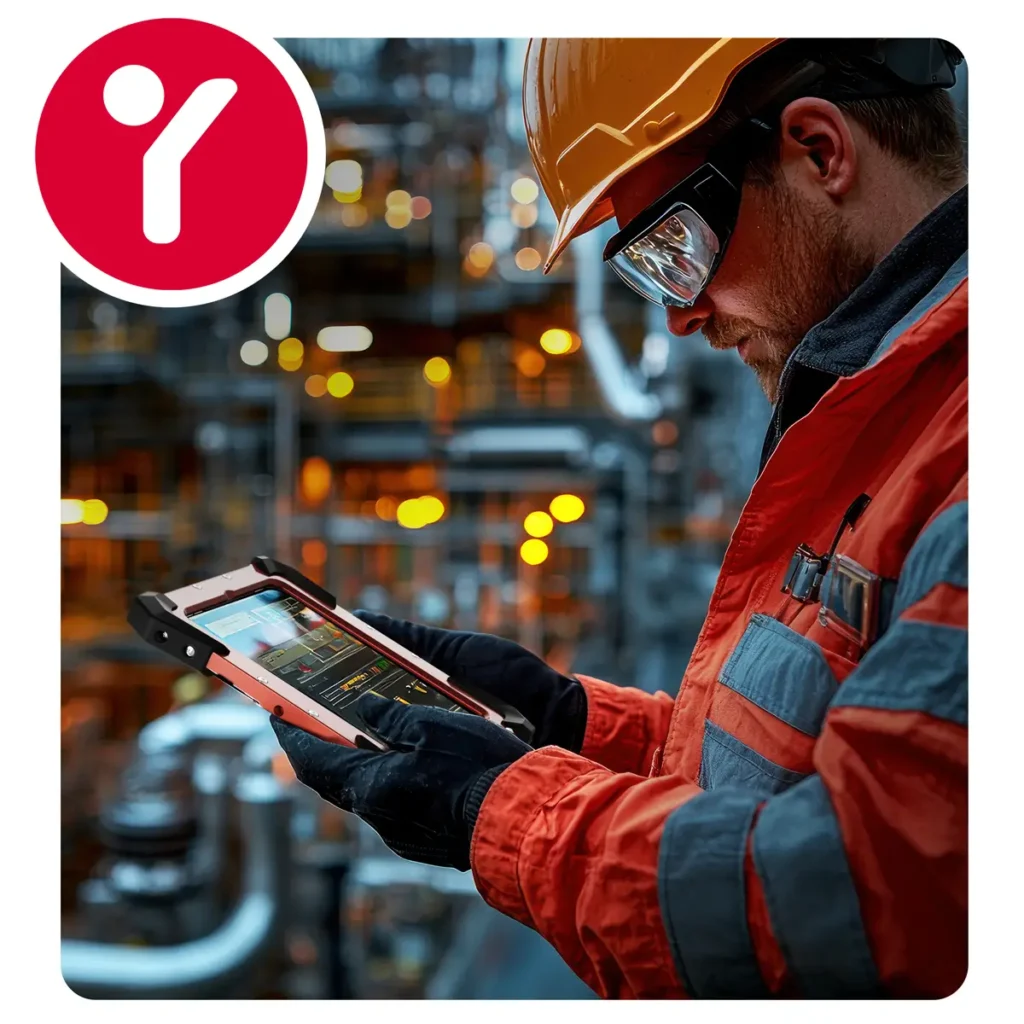
The Rise of the Connected Frontline Worker
Many organizations are moving away from paper-based processes and giving employees access to digital information directly at the point of work.
A production operator may use a tablet to view digital work instructions. A warehouse employee may use one to check inventory. A field technician may access service information while working on equipment. A healthcare professional may use a mobile device to access digital records.
This creates a more connected workforce, but it also creates a new dependency.
When the device is part of the workflow, device availability becomes part of operational efficiency.
The Joy Factory’s solutions are designed to support the connected mobile workforce, helping frontline workers take their devices into demanding environments.
This means organizations need to think beyond the tablet’s specifications.
They also need to consider where and how the tablet will be used.
What Makes an Industrial Environment Different?
A standard tablet may perform perfectly well in an office. However, frontline environments can introduce physical and environmental challenges that are not present in a typical office setting.
For example, a device may be exposed to:
- Accidental drops
- Dust and debris
- Water and moisture
- Oil and grease
- Continuous movement and vibration
- Frequent handling
- Temperature changes
- Heavy equipment and machinery
- Busy workspaces
- Repeated mounting and removal
The risk becomes greater when employees need to carry or operate devices while moving around a facility.
The Joy Factory’s industrial solutions are designed around these types of challenges, with rugged cases offering features such as drop protection, water and dust resistance, protective port covers and compatibility with mounting systems.
Industry 1: Manufacturing
Manufacturing is one of the clearest examples of where rugged mobility can make a difference.
Today’s factories increasingly rely on digital systems for production monitoring, quality control, inventory management, maintenance and work instructions.
A tablet might be used on the production floor to:
- Access manufacturing instructions
- Check production information
- Record quality inspections
- Monitor equipment
- Update maintenance records
- Track inventory
- Communicate operational updates
The challenge is that the production floor is very different from an office.
Machines, moving equipment, dust, oil, vibration and constant employee movement can expose devices to significantly greater physical risk.
The Joy Factory’s manufacturing solutions include rugged cases and mounting options that can help support mobile workflows across factory floors, workstations, carts and forklifts.
Related resource: Why Factory Floor Communication Matters More Than Ever
Why This Matters
If a tablet is being used as part of a production workflow, damaging the device can mean more than replacing hardware.
It can interrupt the process that depends on that device.
This is why device protection should be considered alongside the digital workflow itself.
Industry 2: Logistics and Warehousing
Warehouses are another environment where tablets can become essential operational tools.
Employees may use mobile devices for:
- Inventory management
- Asset tracking
- Order processing
- Barcode scanning
- Picking and packing
- Delivery coordination
- Warehouse management systems
These tasks often happen while employees are walking, operating vehicles or working around pallets, shelving and machinery.
A tablet that is constantly being carried from one location to another faces a different level of risk compared with one sitting on an office desk.
Mounting can also become important.
Instead of carrying a tablet throughout an entire workflow, a device can be securely mounted on a workstation, cart or forklift where appropriate. The Joy Factory’s MagConnect range provides mounting options designed for different workplace configurations.
Related resource: DMR vs WAVE PTX: Which Communication Solution Is Right for Your Operation?
Protection + Accessibility
The goal is not simply to put a tablet inside a stronger case.
The larger objective is to create a mobile device setup that is:
Protected → Accessible → Secure → Easy to Use
When these elements work together, the device can become a more practical part of the workflow.
Industry 3: Oil & Gas
Oil and gas environments introduce another level of consideration.
Field workers may operate around demanding conditions where ordinary consumer devices are not suitable for the environment.
This is particularly important when equipment is required in hazardous locations.
The Joy Factory offers hazardous-location-certified enclosure solutions within its portfolio. Selected solutions provide Class I, Division 2 protection for compatible devices.
This distinction is important.
Not every rugged case is automatically suitable for a hazardous environment.
Organizations operating in these environments should verify the applicable certification, device compatibility and site requirements before selecting equipment.
Related resource: Hazardous Environment Tablet Protection: Triple Access Appointed as Sole Distributor of The Joy Factory’s Rugged Protective Cases
A Practical Consideration
When discussing rugged mobility for oil and gas customers, the conversation should therefore go beyond:
“Is the case durable?”
It should also consider:
- Where will the device be used?
- What hazards are present?
- What certification is required?
- Which device model is being protected?
- How will the device be mounted or carried?
- What operating tasks will employees perform?
The right solution needs to match the environment.
Industry 4: Construction
Construction sites are dynamic environments.
Workers may move between indoor and outdoor areas, carry equipment, climb structures and operate around dust, moisture and heavy machinery.
A tablet can provide useful access to:
- Construction drawings
- Project documentation
- Inspection forms
- Site reports
- Progress updates
- Equipment information
- Communication platforms
However, the more frequently a tablet is used on-site, the more important physical protection becomes.
The Joy Factory positions its rugged cases for demanding environments including construction and field service, with features intended to protect mobile devices from drops, water and other workplace hazards.
For construction organizations, rugged mobility can therefore help bridge the gap between digital tools and physical work environments.
Related resource: RugGear RG170: The Ultimate Communication Solution for Every Environment
Industry 5: Healthcare
Rugged mobility is not limited to industrial environments.
Healthcare organizations are also increasingly using tablets as part of digital workflows.
The Joy Factory highlights applications including electronic health records, mobile access to information and frontline healthcare workflows. Its healthcare solutions include rugged cases, mounting systems and accessories designed to support mobility within medical facilities.
In this environment, the requirements may be different from those on a factory floor.
Healthcare organizations may place greater emphasis on:
- Device durability
- Ease of cleaning
- Mobility
- Secure mounting
- Accessibility
- Workflow efficiency
The key principle remains the same:
The device needs to be protected without getting in the way of the work.
Why a Rugged Case Is More Than "Extra Protection"
It is easy to think of a rugged case as simply an accessory.
But when a tablet is being used as part of an operational workflow, its protective enclosure can influence how the device is actually used.
A well-designed rugged solution can provide several functions at once.
1. Physical Protection
Rugged cases are designed to reduce the risk of damage caused by drops, impacts and demanding environments.
The Joy Factory’s aXtion portfolio includes models with different levels of drop protection, while selected products offer IP-rated protection against water and dust.
2. Better Mobility
Features such as hand straps and ergonomic designs can make devices easier to carry and operate while employees are moving between work areas.
3. Mounting Flexibility
Mounting solutions can allow tablets to be positioned where workers need them, including workstations, vehicles, carts and other workplace locations.
4. Workflow Continuity
When mobile devices are protected against the conditions they are expected to operate in, organizations can reduce the likelihood that physical device damage becomes a source of workflow disruption.
Rugged Does Not Mean "One Size Fits All"
One of the most important considerations when selecting a rugged mobility solution is understanding that different workplaces require different levels of protection.
A tablet used in a retail environment does not necessarily require the same protection as one used on an oil and gas site.
Similarly, a device mounted on a forklift may have different requirements from one carried by a healthcare worker.
When evaluating a rugged solution, organizations should consider:
Environment
Where will the device be used?
Risk
What are the most likely causes of device damage?
Mobility
Will employees carry the device or mount it?
Device
Which tablet or mobile device needs protection?
Workflow
What applications and tasks will the device support?
Certification
Does the environment require specific safety or hazardous-location certifications?
Usability
Can employees comfortably use the device with the protective solution installed?
These questions help organizations avoid choosing a rugged product simply because it looks durable.
The Hidden Cost of an Unprotected Device
The cost of a damaged tablet is easy to understand.
There is the cost of repair or replacement.
But the potential impact can extend beyond the hardware itself.
Consider a field technician who cannot access service documentation because their tablet is damaged.
Or a warehouse employee who cannot update inventory information.
Or a production operator who cannot access digital work instructions.
The actual cost may include:
Device replacement + downtime + lost productivity + workflow disruption
This is why rugged mobility should be viewed as part of an organization’s overall digital infrastructure rather than simply a tablet accessory.
A well-protected device can help organizations maintain access to the digital tools their frontline employees depend on.
Building a More Resilient Mobile Workforce
Digital transformation does not stop at providing employees with tablets.
Organizations also need to consider whether those devices are appropriate for the environments in which employees work.
A connected frontline workforce needs more than connectivity.
It needs reliable access to the tools and information required to perform the job.
That is where rugged mobility solutions can play an important role.
From manufacturing floors and warehouses to construction sites, healthcare facilities and oil and gas operations, the right combination of device, protective case and mounting solution can help organizations bring digital workflows closer to where the work actually happens.
Choosing the Right Rugged Mobility Solution
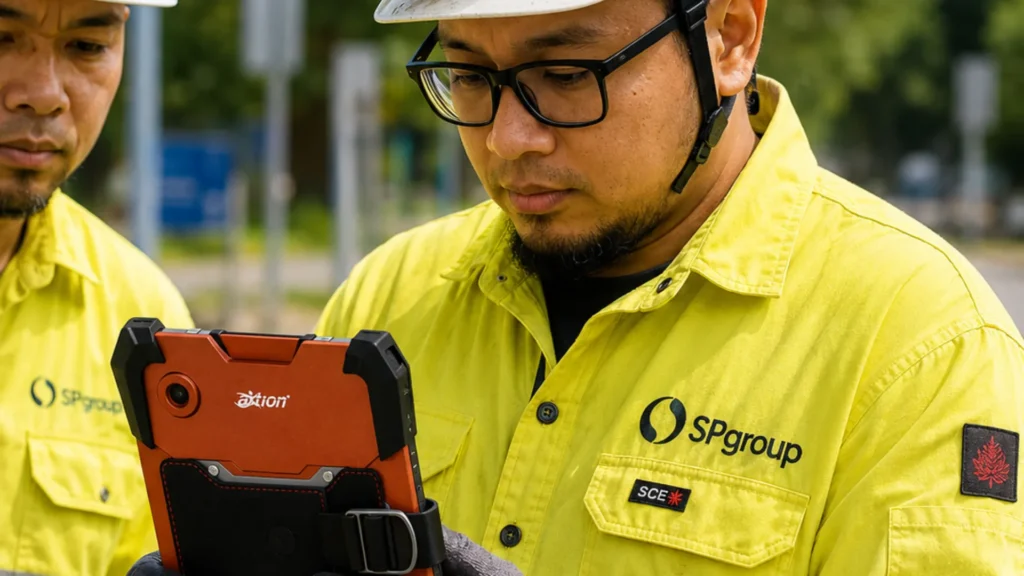
Before investing in rugged tablet protection, organizations should start with the workflow rather than the product.
Ask:
- Where will the device be used?
- What could damage it?
- How frequently will it be moved?
- Does it need to be mounted?
- What level of protection is required?
- Are there certification requirements?
- Which device model needs protection?
Once these questions are answered, organizations can determine what type of rugged case, mounting system or mobility accessory is appropriate.
The Joy Factory’s portfolio includes aXtion rugged cases and MagConnect mounting solutions for Apple and Microsoft devices, with products designed for different workplace and industry requirements.
For organizations looking to extend digital workflows into demanding environments, rugged mobility is not simply about protecting a tablet.
It is about protecting the workflow that depends on it.
Explore Rugged Mobility Solutions with Triple Access
Triple Access helps businesses identify communication, connectivity and mobility solutions suited to their operational environments.
If your organization is deploying tablets in manufacturing, logistics, construction, oil and gas, healthcare or other demanding environments, talk to the Triple Access team about selecting the right rugged protection and mounting solution for your workforce.
Protect the device. Support the workflow. Keep your frontline connected.