TRIPLE ACCESS | INDUSTRY INSIGHTS
One Connected Security Ecosystem:
A Smarter Approach to Protecting People, Assets and Business Operations
Bringing communication, video security and intelligent monitoring together to create safer, more connected and more resilient workplaces.
In today’s business environment, security is no longer just about monitoring premises or responding when something goes wrong. Organisations need to identify potential risks, communicate information quickly and coordinate an effective response across their operations.
From manufacturing plants and logistics centres to hospitals, hotels, construction sites and commercial facilities, businesses face increasingly complex security and operational challenges. Equipment must be protected, employees need to feel safe, incidents must be documented, and critical information must reach the right people at the right time.
Yet many organisations still rely on separate technologies that operate independently. Surveillance cameras record footage, security personnel communicate through two-way radios, and environmental sensors generate alerts through different platforms. When these systems are disconnected, valuable information can be delayed or overlooked.
The solution is to move beyond individual security products and embrace one connected security ecosystem.
By bringing professional communication, intelligent video security, body-worn cameras and smart monitoring together, organisations can improve situational awareness, strengthen coordination and respond to incidents more effectively.
What Is One Connected Security Ecosystem?
A connected security ecosystem brings together different technologies, communication channels and monitoring capabilities to create a more coordinated approach to workplace safety and security.
Rather than treating each device as a standalone solution, the ecosystem enables relevant information to flow between compatible systems and the personnel responsible for managing operations.
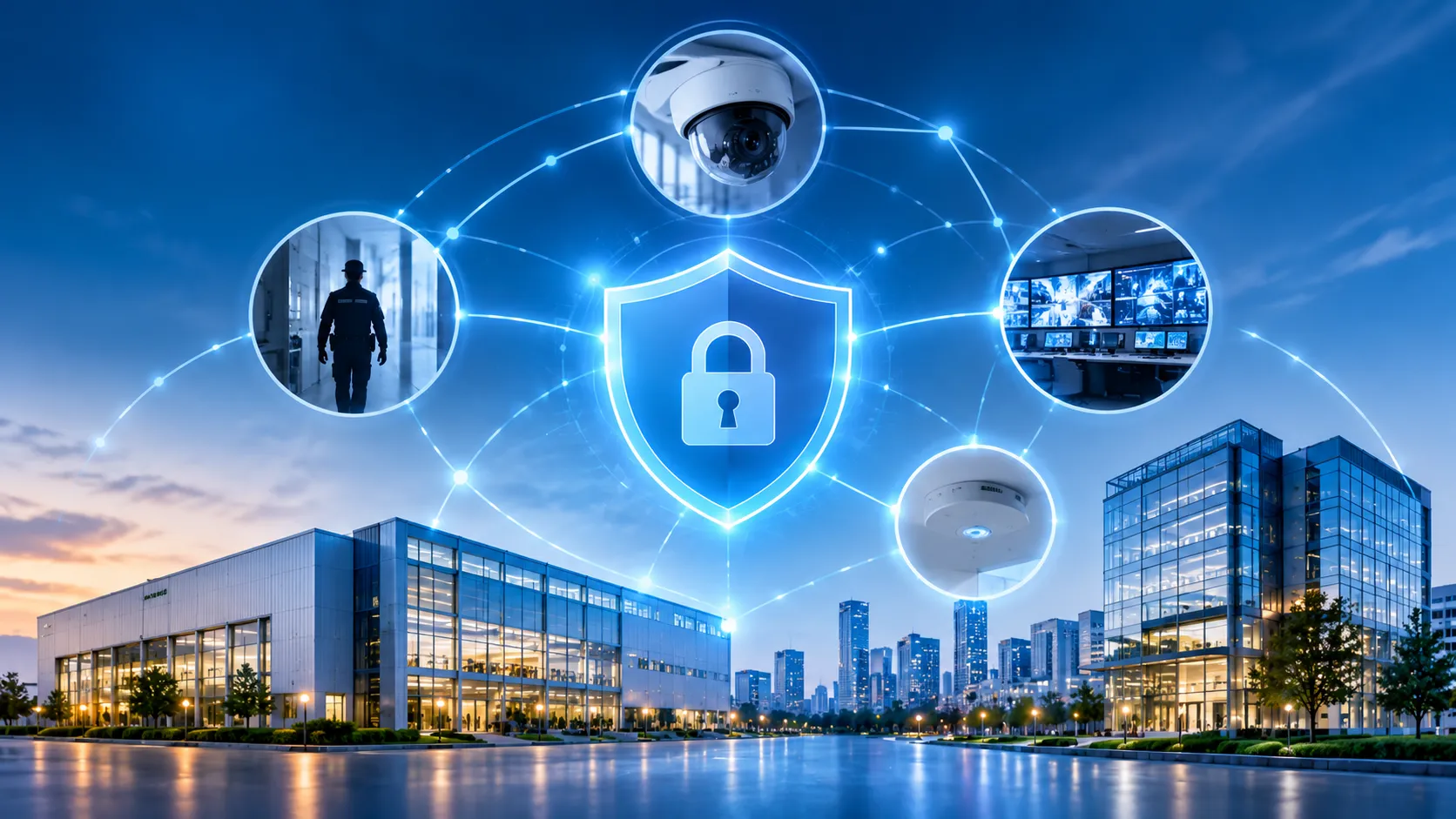
A modern security ecosystem can include:
- Video surveillance — Provides visibility across facilities, operational areas and critical locations.
- Body-worn cameras — Documents frontline interactions and supports incident investigations.
- Smart sensors — Detects selected environmental conditions, unusual activity and potential safety concerns.
- Professional two-way radios — Enables immediate communication between security teams, supervisors and operations personnel.
- Video management and analytics — Helps teams review information, identify relevant events and make informed decisions.
- Centralised monitoring and coordination — Brings relevant information together to support a more organised response.
The real value comes from how these technologies complement one another.
For example, a video system may identify unusual activity, a compatible monitoring platform may generate an alert, and a security officer can receive relevant information through the appropriate communication channel. The team can then coordinate its response while the incident is documented through available recording systems.
This approach reflects Motorola Solutions’ Safety and Security Ecosystem philosophy, which brings together critical communications, video security, command centre capabilities and managed support services.
Explore: Motorola Solutions – Safety and Security Ecosystem
Four Technologies That Work Better Together
1. Video Security: See More, Understand More
Video surveillance remains a fundamental component of modern security operations. However, today’s video security solutions offer more than simply recording activity for later review.
Intelligent video systems and analytics can help security teams identify relevant events, search footage more efficiently and gain better visibility across multiple locations.
Solutions from Avigilon and Pelco support a range of surveillance requirements, from commercial buildings and retail environments to industrial facilities and large operational sites.
Depending on the selected products and configuration, video security capabilities can support:
- Monitoring production floors, warehouses and facility perimeters
- Identifying unusual movement and activity
- Reviewing recorded footage during incident investigations
- Improving visibility across multiple cameras and locations
- Supporting security teams with relevant alerts and video information
Industry application: Manufacturing and logistics
In a manufacturing facility, cameras can provide visibility across production areas, equipment zones and facility perimeters. In a distribution centre, video surveillance can help teams review loading bay activities, monitor operational areas and investigate incidents.
When supported by suitable analytics and monitoring processes, video security helps organisations move from passive recording towards more proactive security management.
Explore:
Avigilon – Video Security Solutions
Pelco – Video Surveillance Solutions
2. Body-Worn Cameras: Protecting Frontline Personnel and Documenting Incidents
Security officers, facility personnel and other frontline employees often work in environments where unexpected incidents can occur.
Fixed cameras provide valuable coverage, but they cannot capture every interaction, particularly during patrols, inspections or incidents outside monitored areas.
Body-worn cameras provide a first-person video record of relevant interactions, helping organisations improve accountability, document incidents and support subsequent investigations.
The Motorola Solutions VB400 Body-Worn Camera is designed for professional environments where reliable video documentation is important.
One particularly useful capability is its integration with selected MOTOTRBO radios. When configured with a compatible radio, an emergency alert can automatically trigger the paired VB400 to begin recording. This can include an emergency button activation or supported Lone Worker and Fall Alert events.
Consider a security officer conducting a night patrol at a large hotel or industrial facility. If an emergency occurs, the officer can activate the radio’s emergency function, triggering the configured body-worn camera to record. This helps document the incident while allowing the officer to concentrate on the situation.
Potential applications include:
- Private security operations
- Manufacturing and industrial facilities
- Shopping centres and retail environments
- Hotels and hospitality operations
- Healthcare facilities
- Transport and facility management teams
The combination of radio communication and body-worn video demonstrates how two separate technologies can work together to improve frontline safety and incident documentation.
Explore:
Motorola Solutions – VB400 Body-Worn Camera
VB400 and MOTOTRBO Integration Guide
3. Smart Sensors: Detecting What Cameras Cannot
Not every workplace risk can be identified through video surveillance.
Environmental conditions, unusual sounds, occupancy levels and other potential hazards may require specialised monitoring technologies.
The Avigilon HALO Smart Sensor adds another layer of situational awareness by monitoring selected environmental and safety conditions. Depending on the model and configuration, capabilities can include vaping and smoke detection, air quality monitoring, occupancy monitoring and alerts for certain critical sounds.
This is particularly useful in environments where installing cameras may be unsuitable due to privacy considerations.
Potential applications include:
- Educational institutions and designated indoor areas
- Healthcare facilities
- Commercial buildings
- Shared workplace environments
- Facilities requiring environmental monitoring
For example, an educational institution may deploy smart sensors in designated privacy-sensitive areas to detect vaping activity without relying on video surveillance. Alerts can then be directed to authorised personnel for assessment and appropriate action.
By extending monitoring beyond visual surveillance, smart sensors help organisations identify conditions that may otherwise go unnoticed.
Explore: Avigilon HALO Smart Sensor
4. Professional Radio Communications: Connecting People When It Matters
Technology can detect an incident, but people still need to respond.
When an emergency or operational disruption occurs, security personnel, supervisors and facility teams must be able to communicate quickly and coordinate their actions.
Professional two-way radio communications provide a dependable channel for teams working across large facilities, warehouses, construction sites and other demanding environments.
Motorola Solutions MOTOTRBO radios, including the R2, R5 and R7 series, are designed to support professional communication requirements across different working environments.
The MOTOTRBO R7, for example, features advanced audio processing, noise suppression and rugged construction to support communication in challenging working conditions.
When connected with compatible technologies, radio communications can become part of a wider security workflow. Selected systems can deliver alerts to compatible radios, helping personnel receive important information without relying solely on phones or separate monitoring terminals.
Industry application: Construction and industrial operations
A construction site may have personnel spread across multiple work zones, machinery areas and access routes. Two-way radios allow supervisors, safety officers and equipment operators to communicate directly, coordinate activities and respond to incidents.
In a warehouse, security and operations personnel can use radio communications to coordinate responses to equipment issues, safety concerns or suspicious activity.
The objective is simple: ensure the people responsible for safety and operations remain connected when it matters most.
Explore: Motorola Solutions – MOTOTRBO R7
How One Connected Security Ecosystem Works in Practice
Consider a logistics and distribution centre operating around the clock.
A conventional security setup may have cameras recording activity, sensors monitoring selected areas and personnel communicating through separate radio networks. While each technology serves a purpose, the response process may still depend heavily on manual coordination.
A connected approach can help streamline the process:
- Step 1 – Detect: A video security system identifies unusual activity in a designated area, or a compatible smart sensor detects an environmental condition requiring attention.
- Step 2 – Analyse: The relevant monitoring platform provides information to help personnel assess the situation and determine whether further investigation is necessary.
- Step 3 – Alert and Communicate: Where the systems are configured for integration, relevant alerts can be delivered to the appropriate personnel through compatible communication devices or monitoring platforms.
- Step 4 – Coordinate the Response: Security officers and operations teams communicate through two-way radios to coordinate their actions and follow established incident response procedures.
- Step 5 – Document and Review: Relevant surveillance footage, body-worn camera recordings and incident information can support investigations, reporting and future operational improvements.
The result is a more coordinated security environment in which detection, communication and response are connected rather than treated as separate activities.
It is important to note that integration capabilities depend on product compatibility, software, licensing and system configuration. A proper assessment is essential before implementation.
Which Industries Can Benefit from One Connected Security Ecosystem?
A connected security ecosystem can support organisations across a wide range of professional industries. The technologies required will depend on the environment, operational risks and business priorities.
| Industry | Operational Challenges | Relevant Solutions |
|---|---|---|
| Manufacturing | Equipment protection, production monitoring, employee safety and perimeter security | Video surveillance, radios and smart sensors |
| Logistics and warehousing | Warehouse visibility, loading bay monitoring, incident response and staff coordination | Video surveillance, radios and body-worn cameras |
| Construction | Site coordination, worker safety, equipment protection and incident documentation | Two-way radios, video surveillance and body-worn cameras |
| Healthcare | Staff protection, patient environments and incident documentation | Video security, body-worn cameras and smart sensors |
| Hospitality | Guest safety, staff protection, facility monitoring and emergency coordination | Video surveillance, radios and body-worn cameras |
| Education | Campus safety, environmental monitoring and incident response | Video surveillance, smart sensors and radios |
| Commercial buildings | Workplace safety, facility monitoring and security coordination | Video surveillance, smart sensors and radios |
| Transportation | Personnel coordination, frontline safety and operational visibility | Two-way radios, video surveillance and body-worn cameras |
For organisations operating in high-demand environments, the ability to connect relevant technologies can support better visibility, faster communication and more structured incident management.
Beyond Equipment Supply: The Importance of End-to-End Service
A connected security ecosystem is only as dependable as the systems, equipment and support behind it.
Selecting the right technology is important, but organisations must also consider what happens after installation. Equipment needs to be tested, systems must be properly configured, and communication devices require ongoing inspection and maintenance to remain reliable.
Without a structured support approach, businesses may experience equipment downtime, communication interruptions, performance issues and unexpected repair costs.
This is where having an experienced technology partner makes a difference.
At Triple Access Sdn Bhd, we believe our responsibility extends beyond supplying communication and security equipment. We aim to support customers throughout the technology lifecycle, from initial consultation and solution planning to deployment, testing, servicing and ongoing maintenance.
Our end-to-end approach includes:
1. Consultation and Requirements Assessment
Every organisation has different operational requirements. We work with customers to understand their environment, existing infrastructure, communication needs and security priorities. This helps identify suitable technologies and develop solutions that address actual operational challenges.
2. Solution Planning and Deployment
The right equipment must be selected based on the intended application, working environment and system requirements. Triple Access supports customers in planning their communication and security requirements, including equipment selection, accessories, configuration considerations and deployment planning.
3. Installation, Configuration and Commissioning
Proper installation and configuration are essential to ensuring that equipment performs as intended. Depending on the project scope, deployment support can include equipment installation, radio programming, system configuration, functional checks and commissioning.
4. Testing and Performance Verification
Testing is an important part of maintaining dependable communication and security systems. Before equipment is deployed or returned to operational use, appropriate checks help verify its condition and functionality. Depending on the equipment and service scope, testing may include radio functionality checks, audio quality checks, battery and accessory inspections, and system configuration verification.
5. Maintenance, Servicing and Technical Support
Security and communication systems require ongoing attention to remain dependable. Triple Access provides after-sales support, including servicing and maintenance, to help customers maintain their equipment and address technical issues throughout its operational life.
6. Long-Term Support and System Optimisation
Business requirements evolve. Facilities expand, teams grow and operational demands change. A technology partner should be able to support customers as their requirements develop, whether through additional equipment, system upgrades, configuration adjustments or recommendations for improved operational efficiency.
Our commitment goes beyond supplying technology. We aim to help customers deploy, test, maintain and get lasting value from the solutions they invest in.
Choosing the Right Technology Partner
Before investing in a connected security ecosystem, organisations should consider more than the initial equipment cost.
The following questions can help guide the decision:
- Does the solution address our operational requirements? Consider the specific risks, working environment and business priorities.
- Can the technologies work together? Check compatibility between cameras, sensors, software and communication devices.
- Can the system grow with the organisation? Consider future expansion, additional facilities and changing operational requirements.
- Is testing and commissioning included? Understand how equipment and systems will be checked before operational deployment.
- What support is available after installation? Clarify servicing, maintenance, troubleshooting, warranty support and repair arrangements.
- Can the technology partner provide ongoing assistance? Consider the availability of technical expertise and long-term support.
A well-planned security investment should deliver value throughout its operational life, not simply at the point of purchase.
One Connected Ecosystem. One Technology Partner. End-to-End Support.
The future of workplace security is not about accumulating more devices. It is about ensuring that the right technologies work together and that the people responsible for protecting an organisation have the information and tools they need to act.
From professional two-way radio communications and body-worn cameras to intelligent video surveillance and smart environmental sensors, a connected security ecosystem can help organisations improve visibility, strengthen accountability and coordinate responses more effectively.
However, technology alone does not guarantee reliable operations. Proper planning, installation, testing, servicing and ongoing maintenance are equally important.
At Triple Access Sdn Bhd, we bring together professional communication and security solutions with an end-to-end service approach. From consultation and deployment to testing, maintenance, servicing and technical support, we work to help customers get the best value and performance from their technology investments.
Whether your organisation is upgrading an existing infrastructure, expanding its operations or planning a new security deployment, Triple Access can help identify solutions that align with your requirements.
Connect your people. Strengthen your security. Keep your operations moving.
Ready to build a more connected security ecosystem?
Contact Triple Access Sdn Bhd to discuss your communication and security requirements.
Contact Triple Access
WhatsApp: +6012-263 7693
Email: enquiry@tripleaccess.com.my
Website: https://tripleaccess.com.my/
Further Reading and Technical Resources
For organisations interested in learning more about connected security technologies, the following official resources provide useful product information and technical references:
- Motorola Solutions – Safety and Security Ecosystem
- Motorola Solutions – Video Security
- Avigilon
- Pelco
- Avigilon HALO Smart Sensor
- Motorola Solutions VB400
- VB400 and MOTOTRBO Integration Guide
- Motorola Solutions MOTOTRBO R7
Product availability, integration capabilities, testing procedures and service coverage are subject to equipment compatibility, local availability, project scope and agreed service arrangements.