In the security industry, failure is not measured in inconvenience — it is measured in seconds.
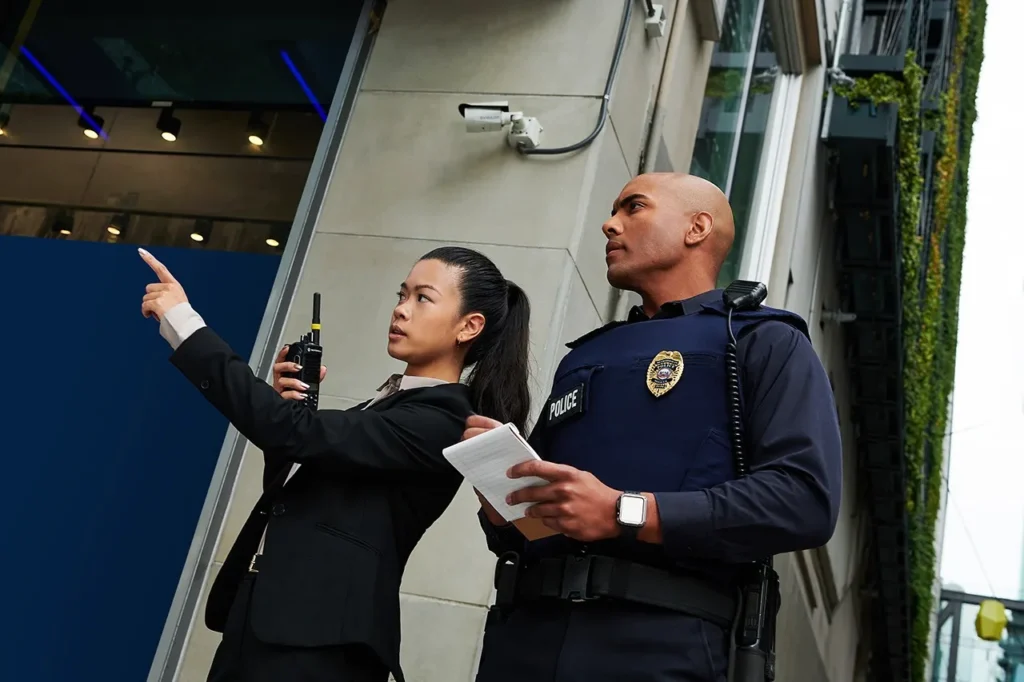
From shopping malls and logistics hubs to highways, industrial plants, and large-scale events, security teams operate in high-pressure environments where communication reliability and coverage directly impact safety, response time, and operational control.
While many organizations rely on smartphones and messaging apps, mission-critical environments demand something more robust.
This is where professional two-way radio systems, Digital Mobile Radio (DMR), and broadband Push-To-Talk (PTT) solutions become essential.
Why Reliability Is Non-Negotiable in Security Operations
Security teams handle:
- Emergency incidents
- Unauthorized access
- Crowd control
- Medical emergencies
- Fire or safety threats
In these moments, communication must be:
- Instant
- Clear
- Secure
- Uninterrupted
Unlike consumer messaging platforms, professional radio systems are designed specifically for mission-critical communication.

Instant Push-to-Talk Response
Two-way radios allow one-to-many communication instantly. There is no dialing, ringing, or waiting for message delivery confirmation. When seconds matter, that difference is operationally significant.
Network Independence
Mobile phones rely on commercial cellular networks. During:
- Network congestion
- Natural disasters
- Power failures
- Large public gatherings
Cellular networks can slow down or fail entirely.
Professional radio systems operate on dedicated frequencies or private networks, ensuring continuity even when public infrastructure is compromised.
Coverage: The Hidden Risk in Security Planning
Coverage gaps are one of the most overlooked risks in security deployment.
Common Coverage Challenges:
- Basement car parks
- High-rise buildings
- Industrial steel structures
- Remote construction sites
- Large warehouse facilities
Inconsistent coverage leads to:
- Delayed response
- Miscommunication
- Increased safety risk
- Operational confusion
Reliable coverage requires proper planning, site surveys, repeaters, and system design — not just devices.
Digital vs Broadband: Choosing the Right Coverage Strategy
Modern security operations often combine:
Digital Mobile Radio (DMR)
Ideal for:
- Private facilities
- Industrial sites
- Manufacturing plants
- Campus environments
Benefits:
- Secure and encrypted communication
- Dedicated infrastructure
- Strong indoor penetration
- No reliance on public internet
Broadband Push-To-Talk (PTT)
Ideal for:
- Multi-site operations
- Nationwide deployment
- Cross-state coordination
- Mobile security fleets
Benefits:
- Wide area coverage via LTE
- GPS tracking
- Multimedia messaging
- Centralized dispatch
The right solution depends on the operational footprint and risk level.
Reliability Beyond Devices: Infrastructure Matters
True reliability is not just about radios.
It includes:
- Proper frequency licensing
- Redundant systems
- Backup power supply
- Professional-grade devices
- Network monitoring
- Preventive maintenance
Security operations should treat communication infrastructure like insurance — invisible when working, critical when needed.
The Cost of Unreliable Communication
When communication fails, consequences include:
- Escalated incidents
- Increased liability
- Poor incident documentation
- Reputational damage
- Financial loss
In high-risk environments, communication is not an expense — it is risk management.
Building a Resilient Security Communication Strategy
To ensure reliability and full coverage, organizations should:
- Conduct professional site surveys
- Identify coverage blind spots
- Deploy repeaters where necessary
- Choose encrypted digital systems
- Integrate dispatch and monitoring tools
- Implement training and SOP alignment
A structured communication system improves:
- Response time
- Command control
- Operational visibility
- Incident accountability
Why It Matters More Than Ever
Security threats are evolving. Facilities are expanding. Events are growing larger. Operations are becoming more complex.
Yet many teams still rely on communication tools that were never designed for mission-critical coordination.
Reliability and coverage are not technical features — they are operational safeguards.
Partner With Experts in Mission-Critical Communication
At Triple Access, we specialize in designing and deploying professional communication solutions tailored for security operations across Malaysia.
From digital radio systems to nationwide Push-To-Talk solutions, we help organizations build resilient, scalable, and future-ready communication networks.
Because in the security industry, when seconds matter — reliability is everything.