Common Misconceptions About Professional Communication & Security Solutions
Most businesses don’t realize they’ve made the wrong communication or security investment until something goes wrong. A delayed response, a missed message, or a blind spot in surveillance can quickly turn into operational disruptions, safety risks, or financial loss. Yet, many of these issues stem from one root cause: buying decisions based on misconceptions rather than real operational needs.
When it comes to investing in professional solutions such as two-way radios, push-to-talk platforms, and video security systems, many buyers still operate based on outdated assumptions.
These misconceptions can lead to poor purchasing decisions, underinvestment in critical infrastructure, and long-term operational inefficiencies.
This article breaks down the most common buyer misconceptions and the reality behind them.
1. “Mobile Phones Are Enough for Team Communication”
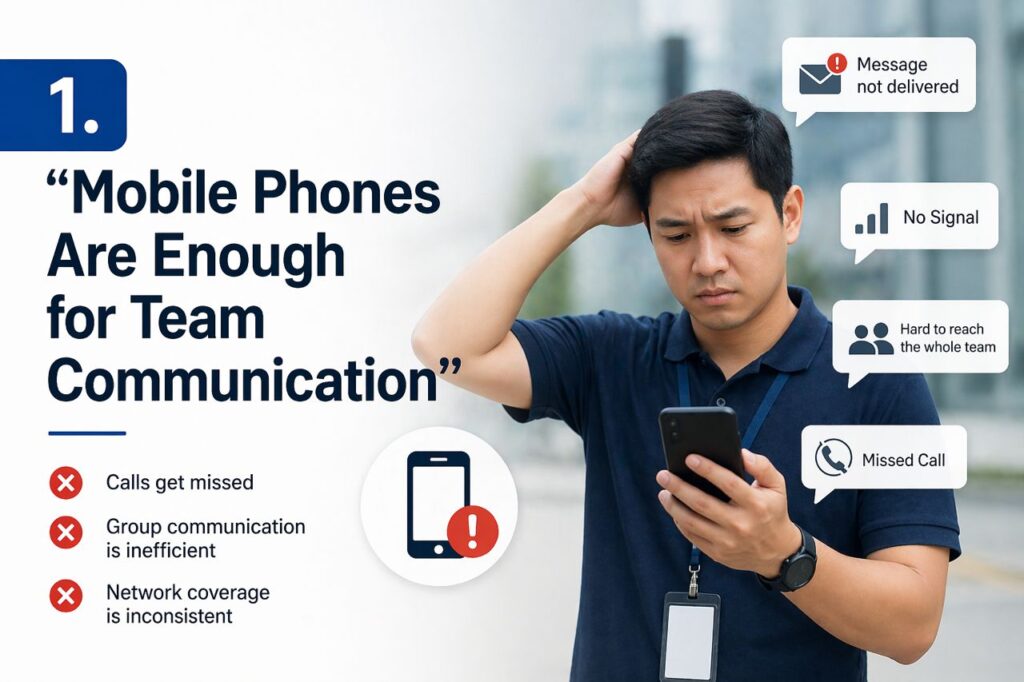
One of the most common assumptions is that smartphones and apps like WhatsApp or Telegram can fully replace professional communication tools.
The Reality
While mobile apps are useful for general communication, they fall short in operational environments:
- Delayed communication (typing vs instant voice)
- Network dependency (poor signal in basements, warehouses, or remote sites)
- No group prioritisation or emergency alerts
- Distractions from non-work notifications
Professional two-way radios and Push-to-Talk (PTT) systems provide:
- Instant one-to-many communication
- Dedicated networks or priority access
- Rugged, purpose-built devices
In high-pressure environments, seconds matter and radios deliver that immediacy.
2. “Two-Way Radios Are Outdated Technology”
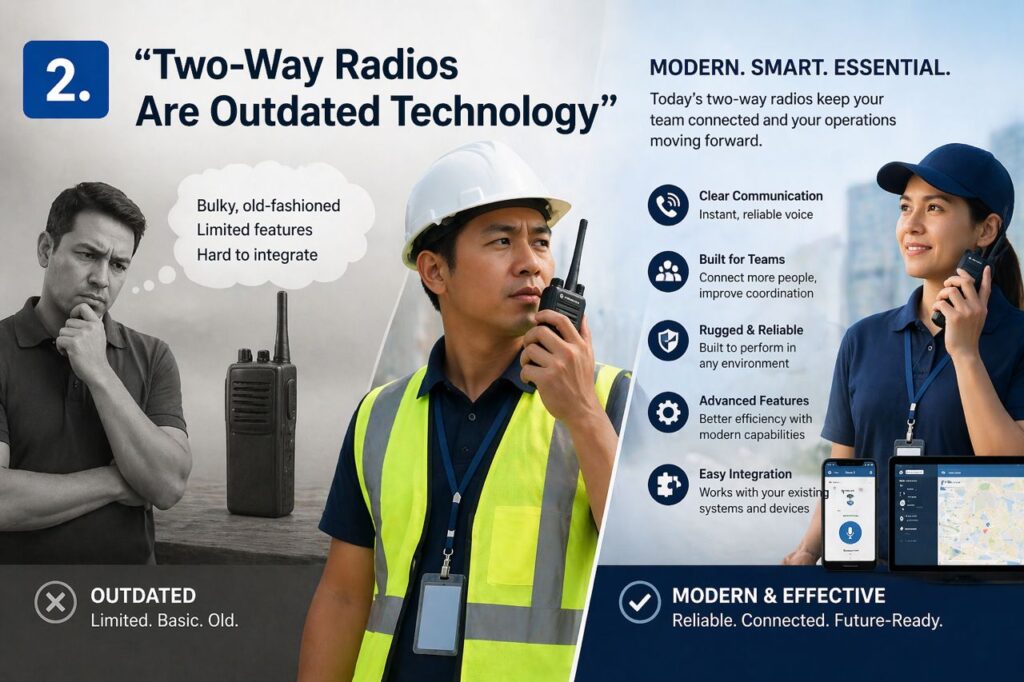
Some buyers still associate radios with older analogue devices used decades ago.
The Reality
Modern digital radios such as those from Motorola Solutions have evolved significantly:
- Crystal-clear digital audio
- GPS tracking and location services
- Integration with broadband (e.g., WAVE PTX)
- Enhanced privacy and encryption
- Long battery life compared to smartphones
Far from outdated, today’s radios are smarter, more connected, and built for enterprise use.
3. “Walkie Talkies Are Only for Security Teams”
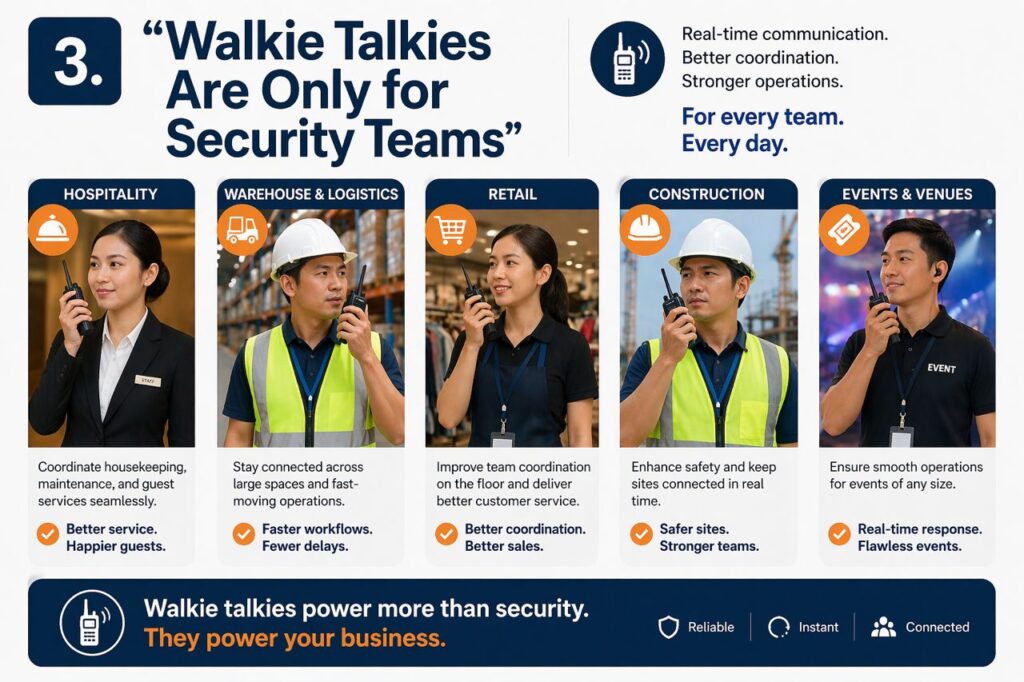
Another misconception is that radios are limited to guards or enforcement personnel.
The Reality
Two-way radios are widely used across industries:
- Hospitality – housekeeping, front desk, maintenance
- Retail & malls – tenant coordination, security, operations
- Warehousing & logistics – dispatch and forklift coordination
- Construction – site safety and supervision
Any team that requires real-time coordination benefits from radio communication, not just security.
4. “Video Surveillance Is Only for Security Monitoring”
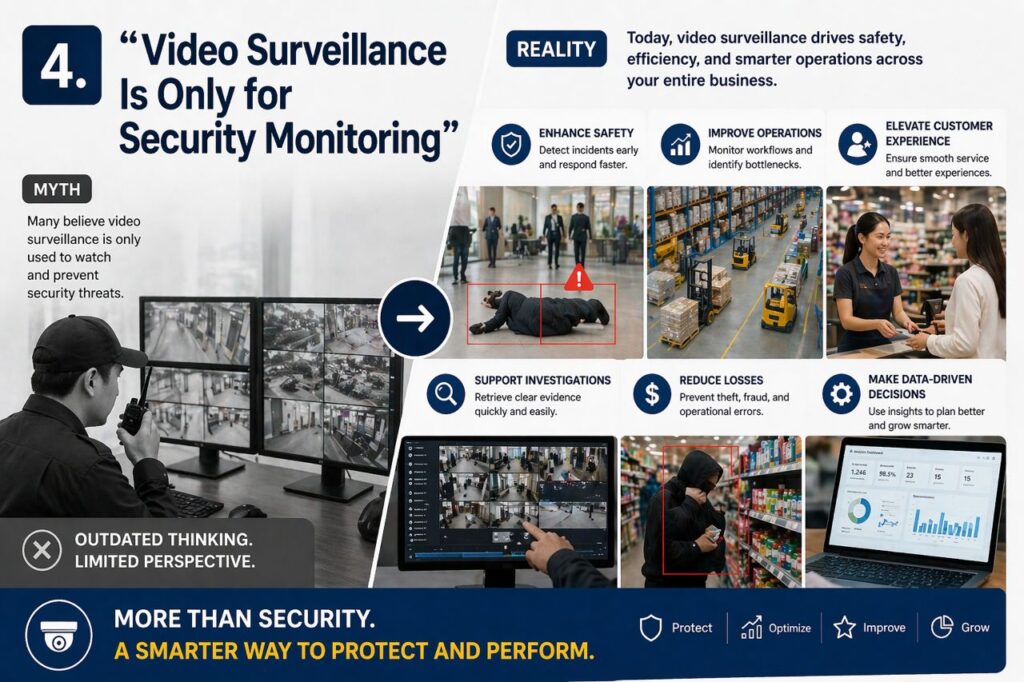
Many buyers think CCTV systems are purely for recording incidents or deterring theft.
The Reality
Modern video solutions such as those from Avigilon are far more powerful:
- AI-powered analytics (detect unusual activity, crowd movement)
- Operational insights (queue monitoring, workflow optimization)
- Searchable video intelligence
- Remote monitoring across multiple locations
Video security today is not just reactive it’s a proactive business intelligence tool.
5. “Professional Systems Are Too Expensive”
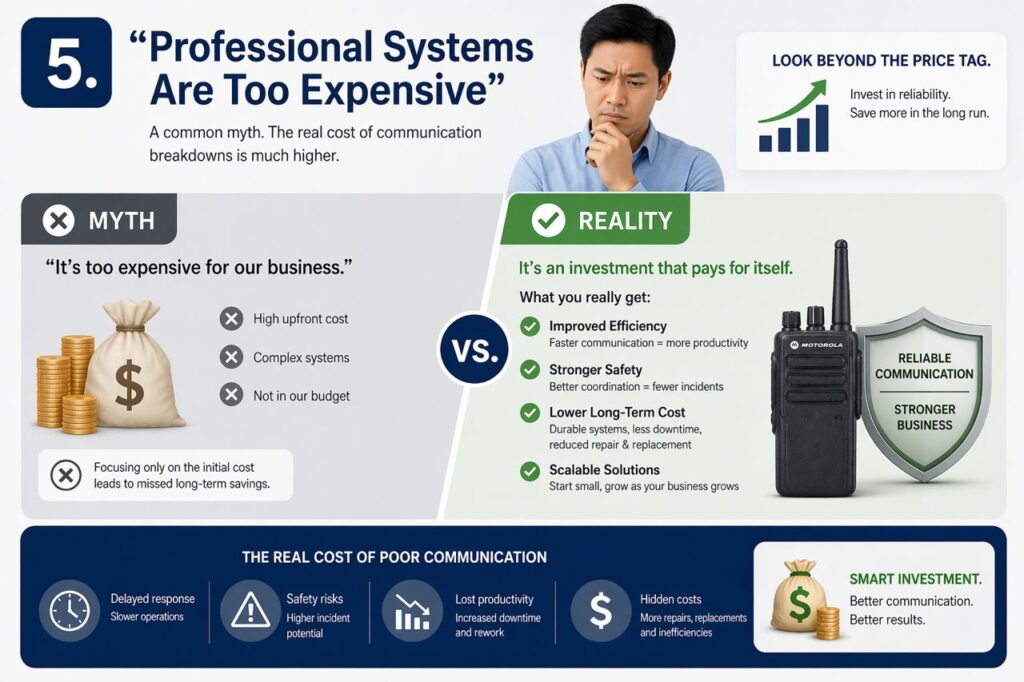
Cost is often perceived as a barrier, especially when compared to consumer alternatives.
The Reality
While upfront costs may be higher, professional systems offer:
- Lower long-term operational costs
- Reduced downtime and miscommunication
- Increased staff productivity
- Improved safety and incident response
In many cases, the cost of inefficiency or miscommunication far outweighs the investment in the right solution.
6. “Coverage Is the Same as Mobile Networks”
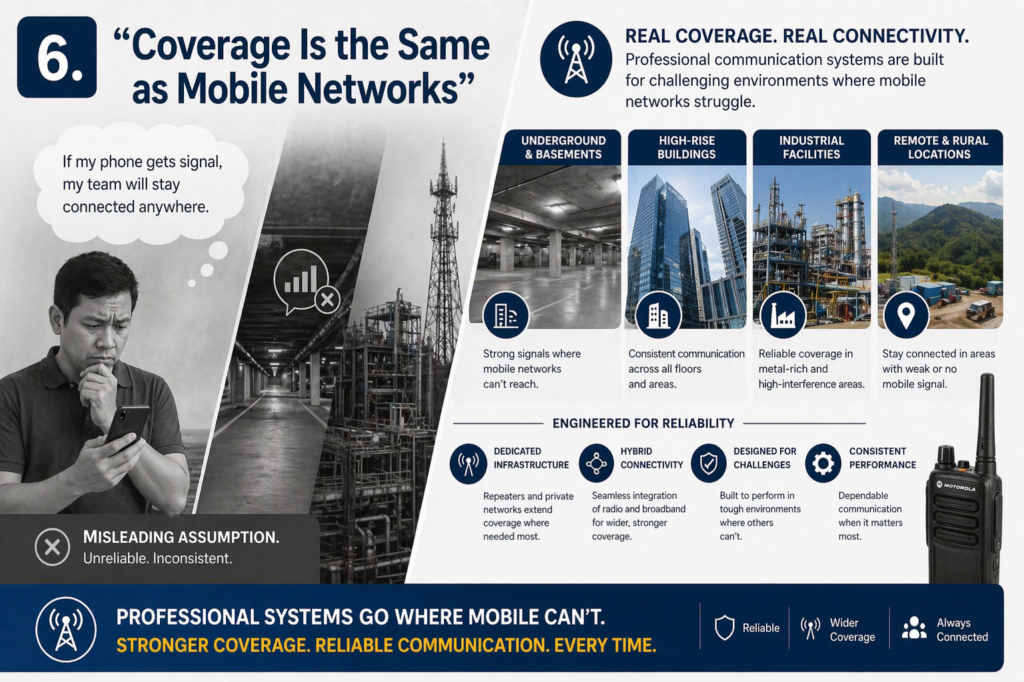
Buyers often assume that communication performance will be similar to mobile network coverage.
The Reality
Professional communication systems are designed for challenging environments, including:
- Underground basements
- High-rise buildings
- Industrial facilities
- Remote or rural areas
Solutions like digital radios and PTT platforms can be engineered with:
- Repeaters
- Private networks
- Hybrid radio-broadband integration
This ensures consistent and reliable coverage where mobile networks fail.
7. “All Communication Devices Are the Same”
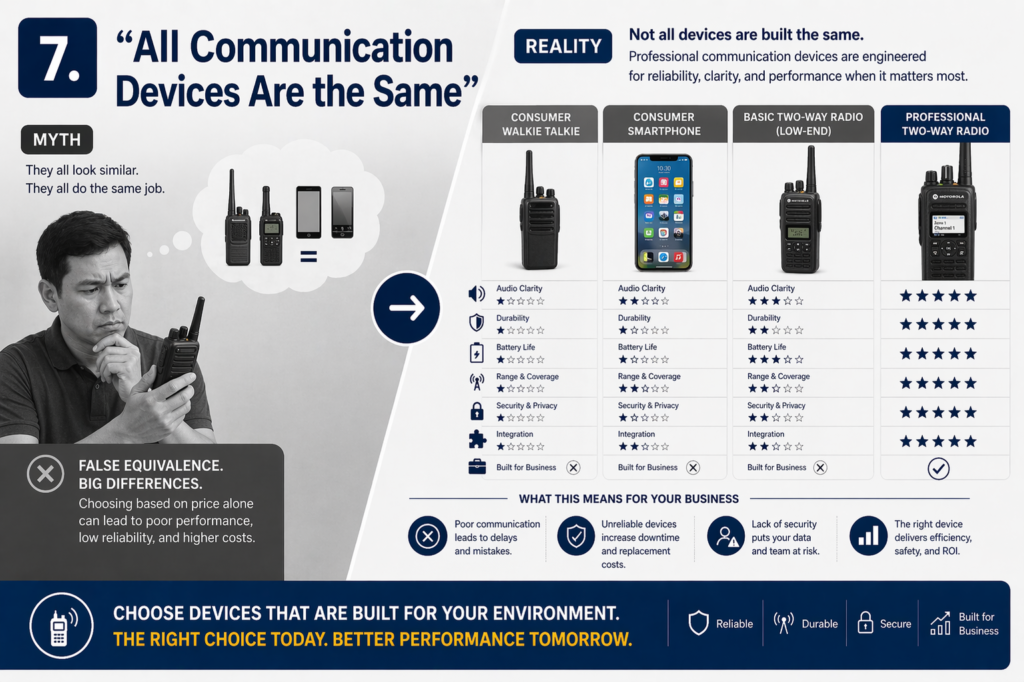
Some buyers focus purely on price, assuming all devices offer similar performance.
The Reality
There are significant differences in:
- Audio clarity
- Durability (IP ratings, drop resistance)
- Battery life
- Network reliability
- Ecosystem integration
Choosing the wrong device can lead to:
- Frequent replacements
- Poor user adoption
- Communication breakdowns
Investing in proven brands and solutions ensures reliability and scalability.
8. “Implementation Is Complicated”
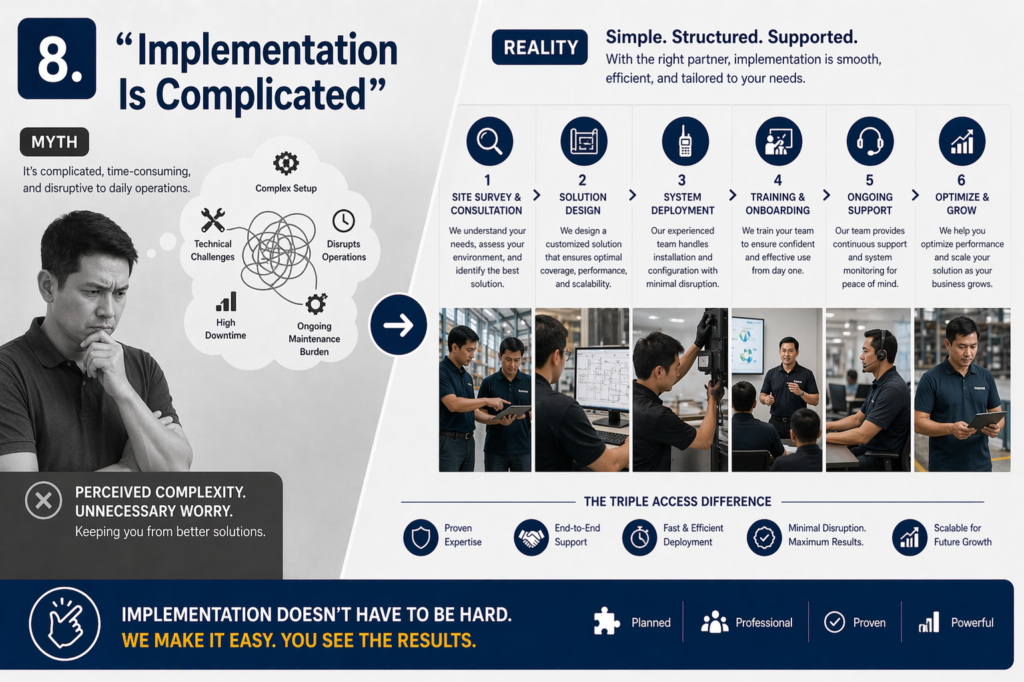
There’s often a perception that deploying professional systems is complex and disruptive.
The Reality
With the right partner, deployment is streamlined:
- Site surveys and coverage planning
- Customised system design
- Training and onboarding
- Ongoing support and maintenance
Modern solutions are designed to integrate seamlessly into existing workflows.
Why Addressing These Misconceptions Matters
Misunderstandings about communication and security technologies can lead businesses to:
- Rely on inefficient tools
- Compromise safety
- Miss opportunities for operational improvement
By understanding the true capabilities of modern solutions, organizations can make informed decisions that enhance productivity, safety, and long-term growth.
The gap between perception and reality in communication and security solutions is significant.
Professional systems are no longer optional, they are essential tools for businesses that value efficiency, reliability, and operational control.
At Triple Access, we help organisations cut through the noise, identify the right solutions, and implement systems that deliver real-world impact.
References
- Motorola Solutions – Official website: https://www.motorolasolutions.com
- WAVE PTX – Product overview and features
- Avigilon – Video analytics and AI surveillance solutions
- International Association of Chiefs of Police (IACP) – Communications best practices
- Occupational Safety and Health Administration (OSHA) – Workplace communication safety guidelines